
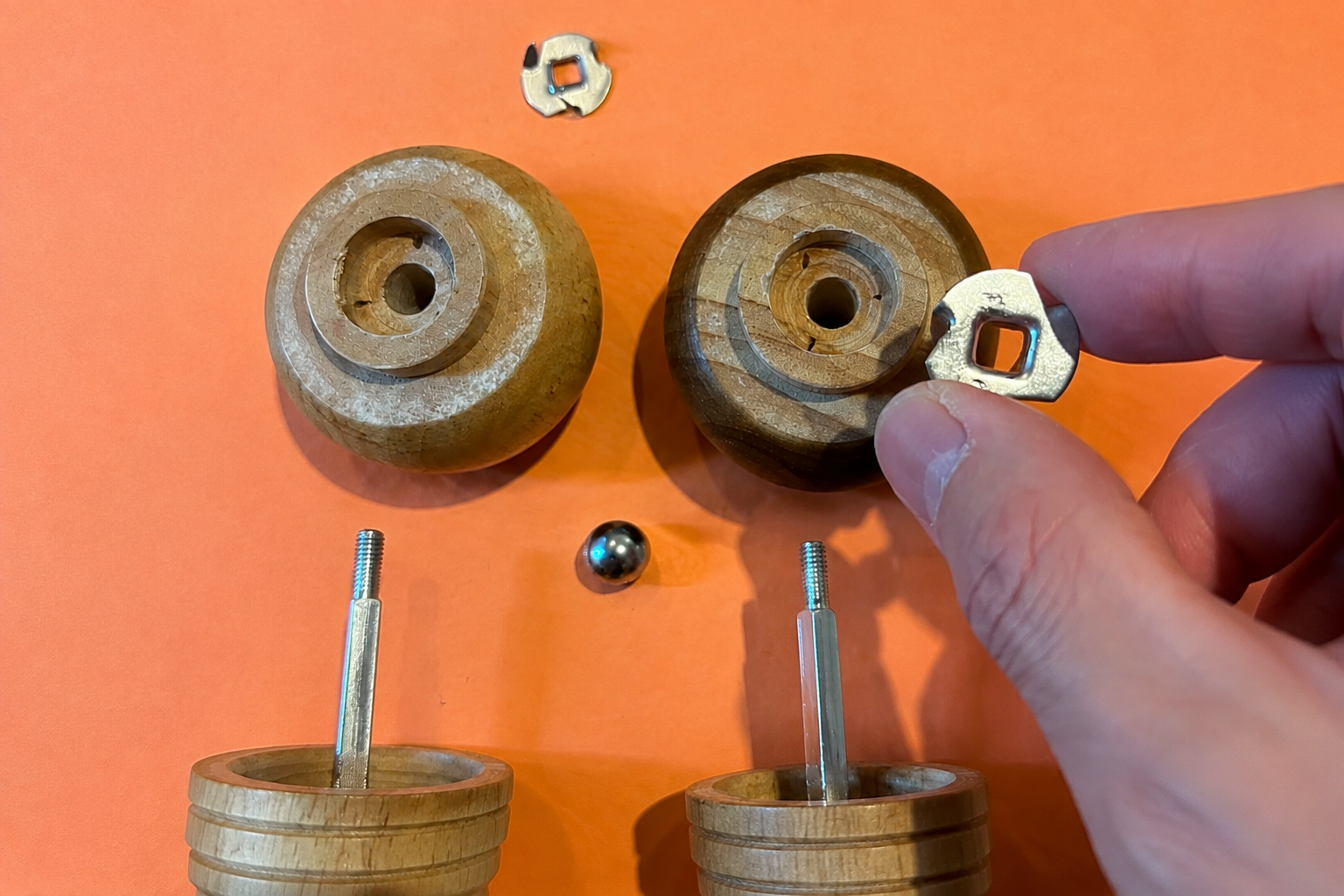

The hidden problems behind low-cost pepper mills and salt grinders
Introduction: The Real Cost of a Cheap Pepper Mill
When buyers search for cheap pepper mills, price is often one of the first factors they consider. However, many buyers later discover that low-cost products may create unexpected problems after purchase.
A lower purchase price can look attractive, especially when suppliers offer:
- many different designs;
- large production capacity;
- competitive quotations.
However, after years of working in cross-border e-commerce and observing customer feedback from international markets, I have learned an important lesson:
The problems with a pepper mill usually do not appear when you first see the product. They appear after customers start using it.
Many grinders look impressive in product photos.
They may have:
- attractive designs;
- modern appearances;
- affordable prices.
However, after weeks or months of daily use, customers may discover problems that were hidden before purchase:
- the grinder stops working;
- the grinding performance becomes unstable;
- the adjustment system becomes unreliable;
- the product becomes difficult to maintain.
For importers and distributors, these problems are not only product issues.
They can become:
- customer complaints;
- replacement costs;
- negative reviews;
- damage to brand reputation.
A low purchase price can become a high replacement cost.
1. Low-Quality Grinding Mechanisms Wear Out Too Quickly
The grinding mechanism is the heart of a pepper mill.
A grinder may have an attractive wooden body or a beautiful design, but the internal mechanism determines the real user experience.
From overseas customer feedback, one of the most common complaints about low-cost grinders is short service life.
Users have reported problems such as:
- the shaft breaking after a short period;
- metal components becoming loose or falling off;
- the grinder suddenly stopping during use;
- the mechanism no longer working smoothly.
For occasional users, these problems may not appear immediately.
However, for people who cook frequently or for commercial users, the difference becomes obvious.
A reliable grinder needs a mechanism that can withstand repeated operation.
This is why the quality of internal components matters more than appearance alone.
2. Poor Grinding Performance Creates Daily Frustration
A pepper mill has one basic purpose:
To grind pepper or salt easily and consistently.
However, many low-cost grinders fail at this basic function.
Common complaints include:
- the grinder requires too much force;
- the grinding result is inconsistent;
- the output is too small;
- users need many turns to get enough pepper.
A good grinder should make cooking easier.
The user should feel that the mechanism works smoothly and efficiently.
Professional users especially value:
- fast grinding;
- stable particle size;
- comfortable operation.
A product that looks good but requires excessive effort will eventually disappoint customers.
3. Unreliable Adjustment Systems Affect User Experience
Adjustable grinding size is an important feature of modern pepper mills and salt grinders.
Users expect to easily control:
- fine grinding;
- medium grinding;
- coarse grinding.
However, some low-cost products have poor adjustment systems.
Customer feedback shows several common problems:
- the adjustment becomes loose after use;
- there is no clear indication of grinding levels;
- users cannot easily return to the previous setting;
- the adjustment feels inaccurate.
For home users, this may only be an inconvenience.
For professional kitchens, consistency is much more important.
Chefs need predictable results.
A reliable adjustment system is part of product quality.
4. Poor Wooden Craftsmanship Affects Product Quality
Wooden pepper mills have a unique advantage:
They provide a natural, classic appearance.
However, wooden products also require careful craftsmanship.
The difference between a high-quality and low-quality wooden grinder is often visible in the details:
- surface finishing;
- polishing quality;
- coating consistency;
- internal processing;
- overall hand feeling.
Some products look attractive from the outside but fail to control small details during manufacturing.
Customers may notice:
- rough surfaces;
- uneven finishing;
- wood fragments;
- cracks after use.
For wooden grinders, quality is not only about choosing good-looking wood.
It is about how carefully every production step is completed.
5. Food-Contact Products Need More Attention to Hygiene and Maintenance
Pepper mills and salt grinders are products that directly contact food.
Therefore, cleaning and maintenance are important parts of the user experience.
Some customers pay close attention to:
- whether the grinder can be cleaned easily;
- whether the internal parts can be maintained properly;
- whether the product can remain hygienic during long-term use.
This is especially true in markets where consumers have high expectations for food safety and kitchen hygiene.
A good grinder should not only work well.
It should also be designed with practical daily maintenance in mind.
6. More Designs Do Not Always Mean Better Products
One common trend in the market is that suppliers compete by offering more and more designs.
Different shapes.
Different colors.
Different appearances.
This can attract buyers at the beginning.
However, product variety does not automatically mean product quality.
For pepper mills and salt grinders, the most important factors are still:
- reliable grinding performance;
- durable components;
- practical structure;
- consistent manufacturing quality.
A successful product is not the one that only looks interesting in a catalog.
It is the one that customers continue using after months and years.
To understand where quality differences come from, it helps to know where pepper mills are actually manufactured in China.
7. Why the Lowest Purchase Price Can Become the Highest Cost
For B2B buyers, the real cost of a product is not only the initial purchase price.
A low-quality grinder may create additional costs:
- customer complaints;
- refunds;
- replacements;
- additional customer service;
- damage to brand trust.
A supplier who focuses only on the lowest price may not always be able to maintain:
- consistent materials;
- strict quality control;
- stable production standards.
This is why experienced buyers look beyond quotation prices and evaluate supplier reliability as part of the decision.
They evaluate:
- product quality;
- supplier reliability;
- production consistency;
- long-term cooperation potential.
8. How We Evaluate Pepper Mills at Pepper Mill Sourcing
My approach to sourcing comes from years of observing overseas customer feedback and understanding how products perform in real markets.
I do not select products only because they have:
- attractive designs;
- low prices;
- large catalogs.
Instead, I focus on products that have:
- reliable grinding mechanisms;
- practical designs;
- durable materials;
- better user experience.
I believe a good sourcing partner should help buyers reduce risks before problems happen.
The goal is not simply to find a cheaper product.
The goal is to help buyers find products that they can confidently recommend to their customers.
Conclusion: Quality Problems Usually Start Before Customers Open the Package
A cheap pepper mill may look like a good deal at the beginning.
However, if the product cannot provide reliable performance, the real cost appears later through:
- customer complaints;
- product returns;
- replacement requests;
- damaged brand reputation.
For importers, distributors, and professional buyers, choosing the right product from the beginning can prevent many future problems.
Quality is not only about what customers see before purchase.
It is about what they experience after months of daily use.
At Pepper Mill Sourcing, we believe reliable products create stronger business relationships.
Because long-term value always comes from quality.
Looking for Reliable Pepper Mill and Salt Grinder Products?
If you are looking for commercial-quality pepper mills or salt grinders for your market, I would be happy to discuss your requirements.
Whether you need products for:
- restaurant supply;
- kitchenware distribution;
- retail channels;
- private label projects;
I can help you evaluate suitable products based on:
- product quality;
- grinding performance;
- user experience;
- long-term reliability.
Feel free to contact me and tell me your requirements, including:
- product type;
- estimated quantity;
- target market;
- specific quality expectations.
I will help you find a suitable sourcing solution.
Related Reading
• Why We Focus on Quality Over Low-Cost Pepper Mills
• Why Powder Residue Matters: How a Better Pepper Mill Design Makes Cleaning Easier
• Pepper Mill & Salt Grinder FAQ