


Matching wooden salt and pepper mills can look almost identical, making them easy to confuse when refilling. The safest way to tell them apart is to check the markings first and the grinding mechanism second.
For the wooden mills we source, pepper mills use metal grinding mechanisms, while salt mills use ceramic mechanisms. Knowing this difference helps prevent incorrect refilling and makes matching sets easier to identify.
Quick Answer
Check the S/P marking first. If the marking is missing or unclear, inspect the grinding mechanism. For the wooden mills we source, pepper mills use metal mechanisms and salt mills use ceramic mechanisms. If neither can be confirmed, check the supplier’s product information before refilling.
Why Matching Salt and Pepper Mills Are Easy to Confuse
Matching wooden sets often use the same wood, height, shape, and finish. If the S/P markings are small or have worn away, appearance alone may not tell you which mill is which.
Do not rely only on where each mill normally sits on the counter. Sets are easily moved, so check the marking or mechanism before refilling.
Check the S and P Markings First
Start with the simplest clue: the product marking.
Depending on the design, a wooden salt and pepper mill set may use:
- S for salt and P for pepper
- Salt or pepper icons
- Engraved markings on the body, knob, or base
- Different knob shapes, wood tones, or other small visual details
Permanent or engraved markings are generally easier to rely on over time than removable labels.
If the original identification is no longer visible, add a simple, durable distinction once you have confirmed which mill is which. This is especially useful when several people use the same set.
How to Identify Salt and Pepper Mills by the Mechanism
If the markings are unclear, check the grinding mechanism.
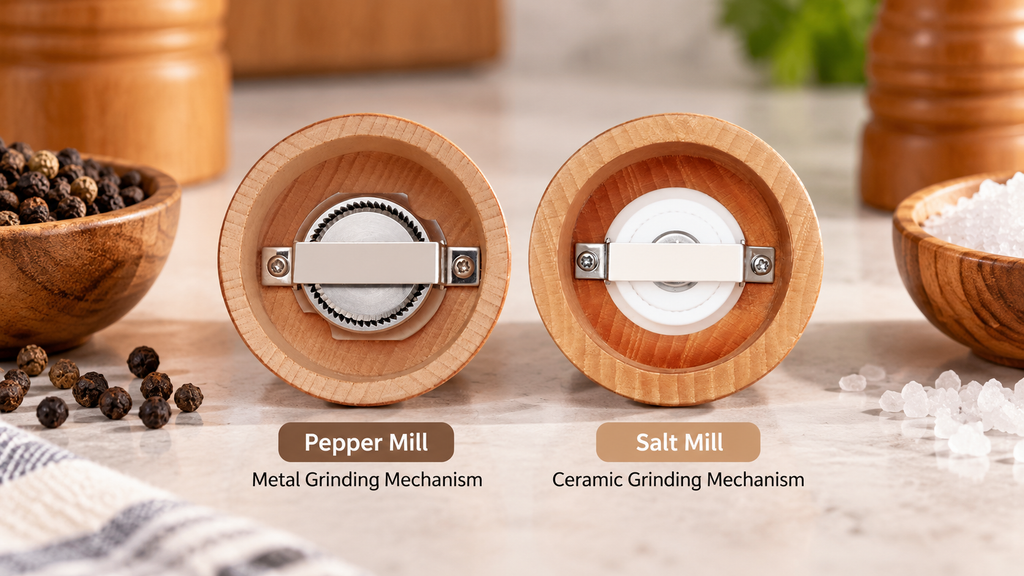
For the wooden products we source:
- Pepper mills use a metal grinding mechanism.
- Salt mills use a ceramic grinding mechanism.
This distinction matters because salt and pepper place different demands on a grinding mechanism. Ceramic is commonly used for salt because it is not susceptible to salt corrosion in the same way as ordinary metal components.
However, do not assume that every salt and pepper mill on the market follows exactly the same construction. Designs vary between brands and suppliers. If you are checking a different product, confirm its specifications rather than identifying it by mechanism material alone.
If the mechanism is hidden or difficult to identify, check the product information or ask the supplier before refilling.
For more detail about mechanism materials and construction, see our guide to pepper mill mechanism design.
Refill One Mill at a Time
One simple habit can prevent most refill mistakes: finish refilling one mill before opening the other.
Check that the reservoir is dry and free of obvious residue. Add whole, dry peppercorns to the pepper mill and the recommended dry salt to the salt mill.
If you refill from larger containers, use separate scoops or clean and dry the scoop before switching ingredients.
If a mill has already been filled with the wrong ingredient, empty it before refilling. Remove accessible residue and follow the supplier’s cleaning instructions before adding the correct ingredient.
If several people use the set, a visible S/P marking or another simple visual distinction can also reduce refill mistakes.
What B2B Buyers Should Check in a Wooden Salt and Pepper Mill Set
For importers, retailers, hospitality suppliers, and private-label buyers, identification may seem like a small product detail. But a matching set should be attractive and easy for the end user to understand.
When evaluating samples, check:
- Identification: Are the salt and pepper mills clearly marked?
- Mechanisms: Can the mechanism material for each mill be confirmed?
- Visual distinction: Can users tell the two mills apart during normal use?
- Refilling: Are both reservoirs easy to open, identify, and refill correctly?
- Sample consistency: Are the markings, mechanisms, finish, and assembly consistent across multiple samples?
Two mills can look beautifully matched without being completely indistinguishable. A small S/P marking, different knob detail, or another subtle distinction can preserve the appearance of the set while making everyday use easier.
If you are comparing pepper mill designs, see our wooden pepper grinders. For matching salt options, you can also review our wooden salt grinders.
Frequently Asked Questions
Can I Use a Salt Mill for Pepper?
It depends on the mill’s mechanism and the supplier’s specifications. Do not assume that a mill designed and labeled for salt is automatically suitable for pepper. Check the product information before changing ingredients.
Do All Pepper Mills Use Metal Mechanisms?
No. Grinding mechanism designs vary between brands and products. The wooden pepper mills we source use metal mechanisms, but this should not be treated as a universal rule for every pepper mill.
What Should I Do If the S/P Marking Has Worn Off?
Check the mechanism and the original product information before refilling. Once you have confirmed which mill is which, add a simple, durable marking so the pair is easier to identify next time.
The Simple Rule: Confirm Before You Refill
When matching salt and pepper mills look alike, check the marking first and the mechanism second. Do not rely only on appearance or where the mills normally sit.
For B2B buyers, clear identification is also worth checking during sample approval. A small S/P marking, mechanism difference, or visual cue can make a matching wooden set easier for the end user to handle correctly.
At PepperMillSourcing, we work as a sourcing and supply-chain partner for wooden pepper and salt mills. We help buyers compare product options, coordinate samples, communicate customization requirements with suppliers, and evaluate practical product details before larger orders are placed.
If you are sourcing matching wooden salt and pepper mill sets for retail, hospitality distribution, or private-label programs, contact PepperMillSourcing with your product requirements, target quantity, market, and customization needs.