
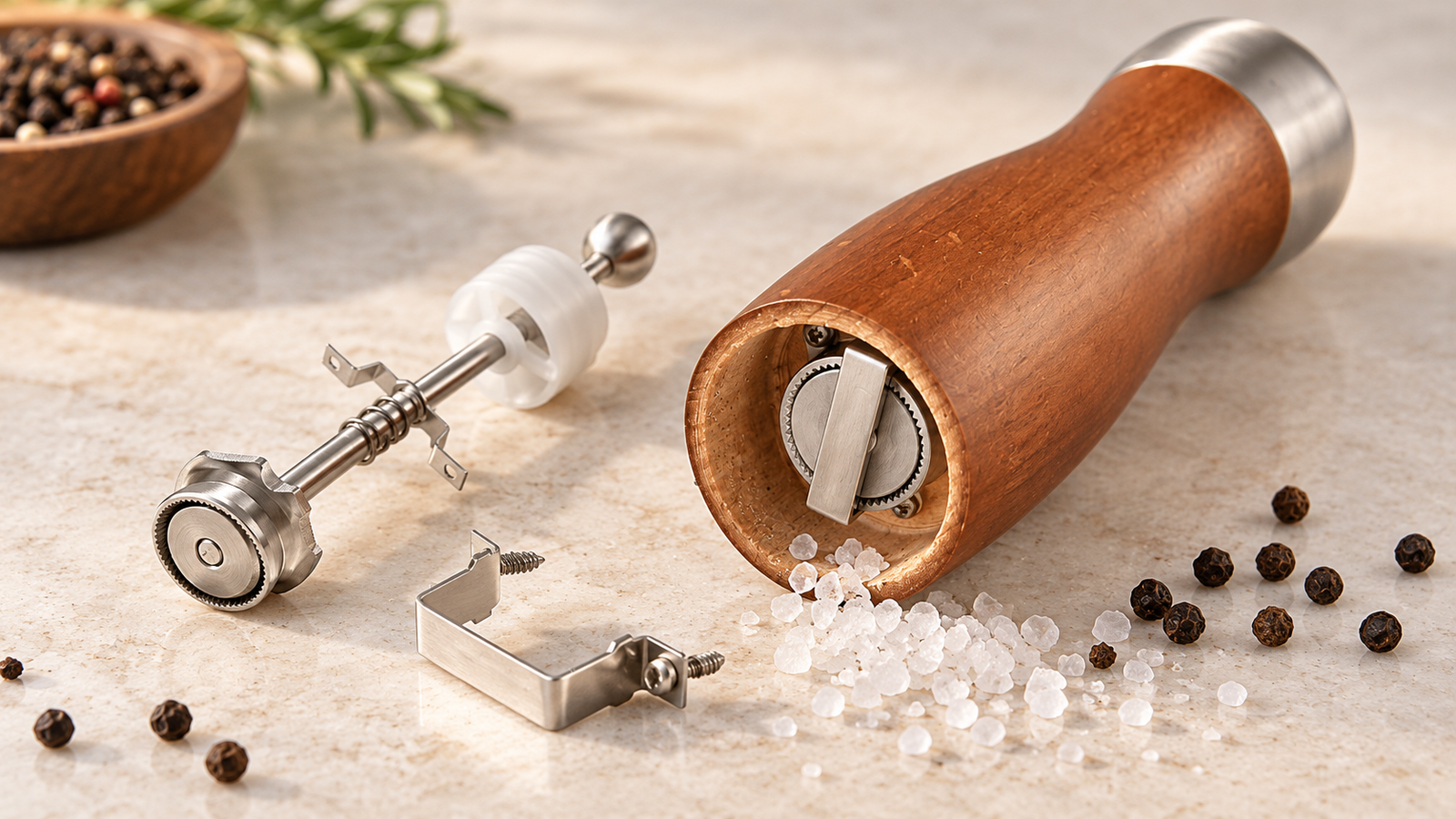

If you accidentally put salt in a pepper mill, stop grinding and empty it as soon as possible.
It does not automatically mean the mill is damaged. But salt should not be left inside a pepper grinding mechanism, especially when metal components are involved. What you do next depends on whether the salt was dry or damp, how long it stayed inside, and whether the mill was used after the refill.
1. Stop Grinding and Remove the Salt
Open the refill chamber and pour out as much loose salt as possible. Do not keep turning the grinder to push the remaining salt through the mechanism. If the mill feels stiff or the adjustment is hard to turn, do not force it. Trapped crystals or incorrect adjustment may be the cause.
Timing matters. Salt noticed straight after refilling is a minor issue. Salt that has sat for several days in a humid kitchen needs a closer look, because moisture and exposure time both increase the risk.
What not to do:
- Do not continue grinding salt through a pepper mechanism.
- Do not force a stiff adjustment knob or grinding head.
- Do not soak a wooden mill unless the care instructions allow it.
- Do not refill with peppercorns until cleaning and inspection are complete.
- Do not use harsh abrasives, rust removers, or improvised lubricants on the mechanism.
2. Why Is Salt in a Pepper Mill a Problem?
Why is salt in a pepper mill a problem in the first place? The answer comes down largely to the grinding mechanism.A wooden pepper mill and a wooden salt mill can look almost identical, but the grinding systems inside are not the same. In the wooden mills we supply, pepper mills use 420 stainless steel mechanisms, while salt mills use ceramic mechanisms.
The difference is intentional. Prolonged salt exposure, particularly with moisture, can cause corrosion in unsuitable metal parts. That is why a stainless steel pepper mechanism should not be treated as permission to grind salt.
It also explains the key limitation: cleaning removes remaining salt, but it does not reverse corrosion or repair a damaged grinding surface. That is why inspection matters.
3. Clean and Inspect the Mechanism
Remove the grinding mechanism by following the care instructions for your specific model, then clear any remaining crystals. Do not assume removable parts can be soaked or washed in a dishwasher.
Before reassembly, check the grinding surfaces, shaft, threads, and fittings under good light:
| What You Find | Recommended Next Step |
|---|---|
| Salt crystals remain | Continue cleaning before reassembly |
| Orange or brown deposits on metal parts | Ask the supplier to assess before reuse |
| Pitting, flaking, or visible damage | Discuss repair or replacement of the component |
| Stiffness or scraping after reassembly | Stop using the mill and request support |
| Unidentified particles from the outlet | Keep the mill out of food service until the cause is found |
If anything looks unusual, take clear photos before reassembly. When contacting the supplier, include the model, the type of salt, how long it stayed inside, whether the mill was operated, and whether moisture was involved.
4. Reassemble and Test
Once the mechanism is clean, inspected, and dry, reassemble it in the correct sequence. If something does not fit, stop and check rather than tightening with extra force.
Refill with peppercorns and test over a clean plate. The mill should turn smoothly, the grind adjustment should work, and the output should match the setting. If you notice stiffness, scraping, or unexpected debris, stop using it and investigate further.
5. From One Small Mistake to a Sourcing Question
For a home cook, a salt mix-up is a one-off. For restaurants, hotels, and caterers, where several staff refill dozens of tabletop mills, it will almost certainly happen sooner or later.
Simple habits reduce the risk:
- Clearly identify pepper and salt mills.
- Keep refill ingredients in separate, labelled containers.
- Refill one type of mill at a time.
- Give staff basic maintenance instructions.
But for buyers choosing a product, the more useful question is this:
When something goes wrong, can the mill be inspected and maintained, or does it have to be thrown away?
What to Ask When Sourcing Wooden Pepper and Salt Mills
Price and appearance matter, but three questions tell you more about long-term value:
- Are the mechanism materials suited to the intended ingredient?
- Can the grinding mechanism be removed and reassembled without damaging the wooden body?
- Are the right tools and maintenance instructions provided?
This is where the wooden mills supplied by PepperMillSourcing are designed to help. The pepper mills use 420 stainless steel mechanisms, and the salt mills use ceramic. Both systems are removable and built for repeated disassembly and reassembly, with matching tools supplied. After an accidental refill, the mechanism can be accessed, cleaned, and inspected before the mill goes back into service.
A removable mechanism does not make a grinder immune to misuse. What it gives you is better access for cleaning, inspection, and component-level support, which matters when you are responsible for hundreds of units in the field.
If you discover salt in a pepper mill, the immediate priority is to stop grinding, remove the salt, and inspect the mechanism before reuse. For buyers, the same incident also highlights why mechanism design and maintenance access matter when evaluating wooden mills.
Test the Samples Yourself
We recommend evaluating actual samples rather than comparing appearance and quotations alone. Check the mechanism, grind performance, finish, and maintenance access under your own use conditions before moving to a larger order.
Need samples or technical information? Contact PepperMillSourcing to discuss our wooden pepper and salt mills, mechanism specifications, customization options, and samples.