
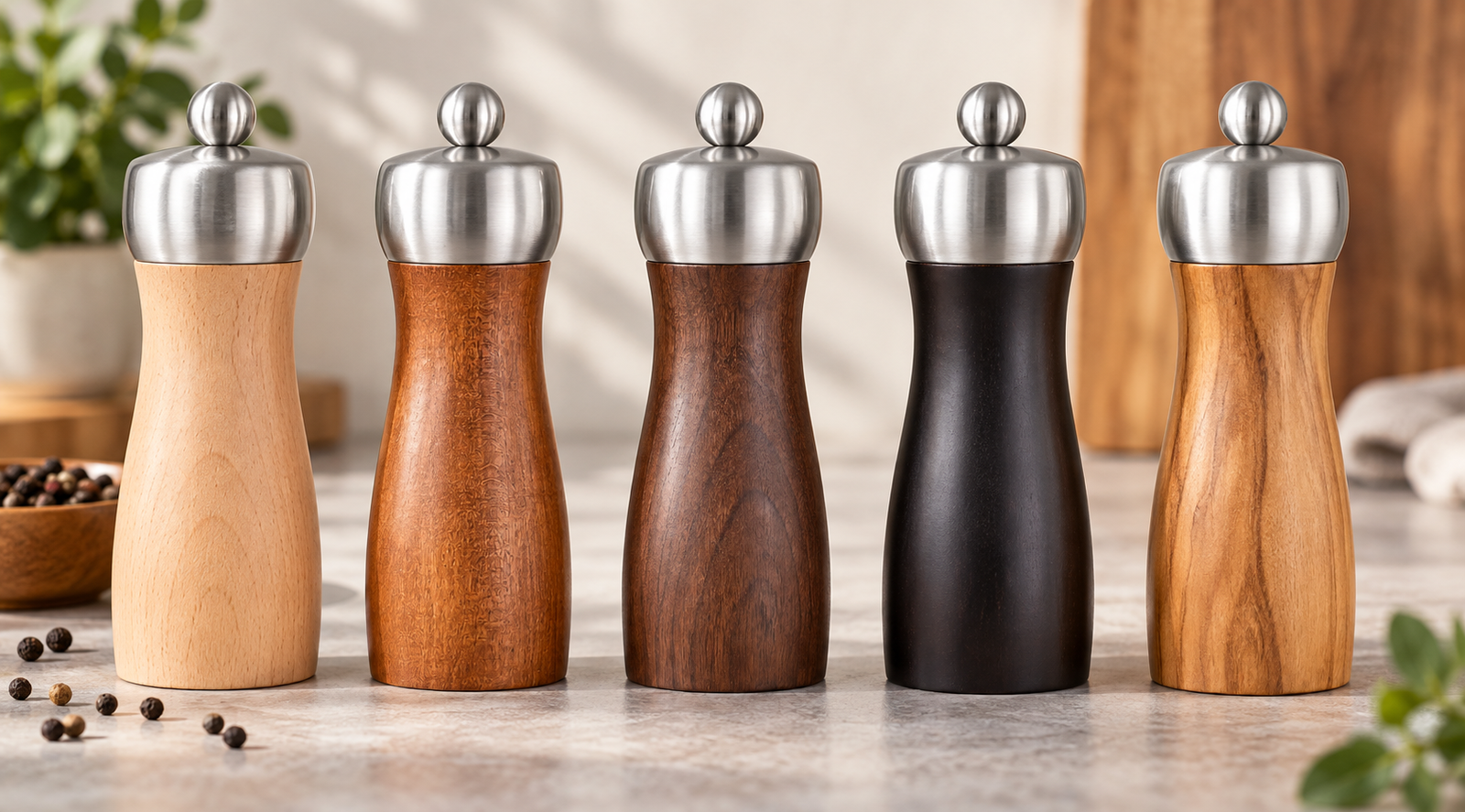

When comparing wooden pepper mill finishes, B2B buyers should look beyond wood species, shape, size, grinding mechanism, and packaging. The surface finish can receive less attention, especially when wooden pepper mill samples look similar in photographs.
But “beech,” “acacia,” or “walnut” tells you the wood species. It does not necessarily tell you how the surface has been finished.
A wooden pepper mill may be unfinished, oiled, waxed, lacquered, varnished, painted, or treated with another finishing system. The finish can affect the product’s appearance, surface feel, cleaning requirements, and end-user care instructions.
For B2B buyers, the key questions are:
What exactly is the finish, what care does it require, and does the sample match the product you want to order?
These details are best confirmed during sampling rather than after production.
Why the Wood Finish Matters in Sourcing
The finish is part of the product specification, not just a cosmetic detail.
A request for a “natural-looking wooden pepper mill,” for example, can still be ambiguous. Does “natural” mean unfinished wood, an oiled surface, a waxed finish, or a clear coating?
Rather than relying on general descriptions, buyers should confirm:
- The wood species
- The surface finish or coating
- The expected colour and sheen
- The surface feel and grip
- The recommended cleaning method
- Whether periodic maintenance is required
- What care information should be provided to the end user
The goal is not to find one finish that is universally “best.” It is to understand exactly what you are buying and whether it suits your product requirements.
Common Wooden Pepper Mill Finishes You May Encounter
Finish terminology can vary between suppliers. The following descriptions are examples buyers may encounter:
| Finish | What the Buyer Should Confirm |
|---|---|
| Unfinished wood | Whether treatment is required and how the surface should be maintained |
| Oiled | Finishing system used and whether periodic re-oiling is required |
| Waxed / oil-and-wax | Product used and recommended maintenance |
| Hardwax-oiled | Specific finishing system and care method |
| Lacquered | Appearance, sheen, cleaning method, and maintenance restrictions |
| Varnished | Coating specification and recommended care |
| Painted / coated | Coating type, appearance requirements, and cleaning instructions |
| “Natural” or unclear | Ask the supplier to identify the actual surface treatment |
The key point is simple:
Wood species and wood finish are two different specifications.
A “beech wooden pepper mill” does not fully describe the exterior surface. Likewise, “natural finish” should be clarified if appearance and maintenance matter to your project.
Oiled, Waxed, or Lacquered: Don’t Judge by Appearance Alone
Photographs are useful for choosing a visual direction, but they may not reveal how the wooden surface has been treated.
Instead of identifying a finish from appearance alone, ask the supplier:
- What finishing system is used?
- Does it require periodic maintenance?
- What cleaning method is recommended?
- Should oil, wax, detergents, or other products be avoided?
- Can maintenance change the colour, sheen, or feel?
This matters because care instructions can differ between wooden mill products. Some specific products are designed for periodic oiling, while others are intended to be cleaned without adding another surface treatment.
A care routine for one wooden mill should therefore not automatically be applied to another.
What to Check During Sample Evaluation
When evaluating wooden pepper mill finishes, the sample stage is the best time to turn a general finish description into something the buyer and supplier both understand.
Appearance
Check the colour, visible grain, and sheen under consistent lighting.
Natural wood varies, so the goal is not to make every piece look artificially identical. Instead, establish what appearance and level of variation are acceptable for your product.
Surface Feel
Hold and operate the mill.
Check whether the finish feels comfortable and provides the grip you expect from a handheld kitchen product.
Consistency
When possible, compare several samples for obvious differences in colour, sheen, texture, and overall finishing appearance.
If these details matter to the project, make sure the approved sample and specification clearly communicate what has been accepted.
Care Requirements
Confirm how the exterior should be cleaned and whether periodic oiling, waxing, or another treatment is required.
If maintenance is necessary, ask which care product is compatible with the finish and whether it can affect colour, sheen, or grip.
Exterior wood care should also remain separate from the grinding system. Care products intended for the wooden body should not automatically be applied to the reservoir or mechanism.
For more information about the grinding system itself, see our guide to pepper mill mechanism design.
Common Sourcing Mistakes With Wooden Pepper Mill Finishes
Several simple mistakes can leave too much room for interpretation.
Specifying only the wood species.
“Beech” or “acacia” does not define the surface treatment.
Treating “natural finish” as a complete specification.
Ask what finish or coating is actually used.
Approving appearance without discussing care.
A sample may look right while still requiring maintenance that has never been discussed.
Evaluating only one sample when consistency matters.
Comparing several samples can help establish reasonable expectations for natural wood and finishing variation.
Leaving care instructions until after production.
If specific cleaning or maintenance is required, clarify it before packaging and product information are finalized.
B2B Sample Approval Checklist
Before approving a wooden pepper mill sample, confirm:
- What wood species is used?
- What finish or coating is applied?
- What colour, sheen, and surface feel have been approved?
- What level of natural variation should be expected?
- How should the exterior be cleaned?
- Does the finish require periodic maintenance?
- If so, what care product is recommended?
- Can maintenance change the appearance or grip?
- Are there products or cleaning methods that should be avoided?
- What care information should be provided to the end user?
Keep the approved sample and relevant specifications as references for the sourcing project.
For matching wooden sets, you can also see our guide to telling salt and pepper mills apart. For storage and moisture considerations, see our guide to pepper mill storage.
Make the Finish Part of Your Product Specification
Wooden pepper mill finishes should not be reduced to vague descriptions such as “natural.”
Confirm the wood species and finish separately, evaluate the appearance and surface feel during sampling, and understand the cleaning and maintenance requirements before approving the product.
There is no single finish that is right for every project. What matters is knowing what you are buying, what has been approved, and what the end user needs to know about caring for the product.
At PepperMillSourcing, we work as a sourcing and supply-chain partner for wooden pepper and salt mills. We help buyers compare product options, communicate specifications with suppliers, coordinate samples, and clarify details such as wood finishes, grinding mechanisms, packaging, and customization requirements.
If you are sourcing wooden pepper mills for retail, hospitality distribution, wholesale, or private-label projects, contact us with your target market, estimated quantity, product requirements, and preferred finish or reference sample.