

Yes. A well-designed commercial manual pepper mill can handle frequent restaurant seasoning, although very large batch preparation may still require dedicated grinding equipment.
For restaurants, grinding performance is only part of the decision. A commercial pepper mill must also be comfortable to operate, durable enough for repeated handling, easy to maintain, and attractive on the dining table.
At PepperMillSourcing, we focus on commercial-quality wooden pepper and salt mills that combine effective grinding mechanisms with practical construction for professional foodservice environments.
Why the Grinding Mechanism Matters for Commercial Pepper Mills
The performance of a commercial manual pepper mill depends largely on how effectively its grinding components engage and cut peppercorns.
Our current wooden pepper mill design uses a 420-grade stainless steel grinding core with CNC-machined cutting teeth, combined with a 304 stainless steel grinding plate and drive shaft.
These components work together to support effective grinding:
- Sharp cutting teeth: CNC machining creates defined cutting edges that help break down peppercorns, including for finer grinding.
- Closely matched grinding components: The grinding core and mating surface are designed to engage peppercorns effectively.
- Stainless steel drive shaft: Transfers rotational force from the turning head to the grinding mechanism.
The objective is to produce usable ground pepper without unnecessary turning resistance.
For restaurant staff who grind pepper repeatedly throughout the day, the grinding mechanism and power transmission can make a meaningful difference to the operating experience.
However, material specifications alone cannot establish grinding output. Buyers should evaluate the complete mechanism under actual working conditions.
Commercial Manual vs. Electric Pepper Mills for Restaurants
Electric grinders use motor power, while manual mills depend on hand rotation. Both have a place in professional kitchens.
The key difference is operating method, not an automatic advantage in grinding quality or output.
| Factor | Commercial Manual Mill | Electric Mill |
|---|---|---|
| Power | No electricity or batteries | Requires a power source |
| Grinding output | Depends on mechanism and user operation | Depends on motor and mechanism |
| Operating effort | Requires turning; tooth design and alignment affect resistance | Motor reduces manual turning |
| Tableside service | Well suited to traditional restaurant presentation | Suitable where powered operation is preferred |
| Maintenance | No motor or batteries to maintain | Additional electrical components |
For everyday seasoning, repeated kitchen use, and tableside service, a commercial manual pepper mill can be a practical choice.
When Is Manual Grinding Not the Best Option?
Restaurants preparing very large quantities of ground pepper within a short period may benefit from dedicated electric or commercial batch grinders.
The decision should depend on the required quantity, grind texture, available time, and staff comfort—not simply whether the equipment has a motor.
For a closer comparison of output and turning effort, see our high-output pepper mill guide.
Commercial Salt Grinders: Wear-Resistant Ceramic Mechanisms
Salt requires a different grinding mechanism from pepper.
Our commercial wooden salt grinders use wear-resistant ceramic grinding components designed to process coarse salt into finer particles.
Ceramic grinding components are corrosion-resistant and suitable for salt applications. Other metal fittings must also be evaluated for corrosion resistance, particularly in environments where salt and moisture are present.
Grinding geometry, component quality, and adjustment all influence performance and operating resistance.
For restaurants using freshly ground salt regularly, a suitable ceramic mechanism provides a practical manual grinding solution without requiring an electric motor.
Explore our commercial wooden salt grinders for available designs and product options.
Durable Wooden Construction for Restaurant Tables
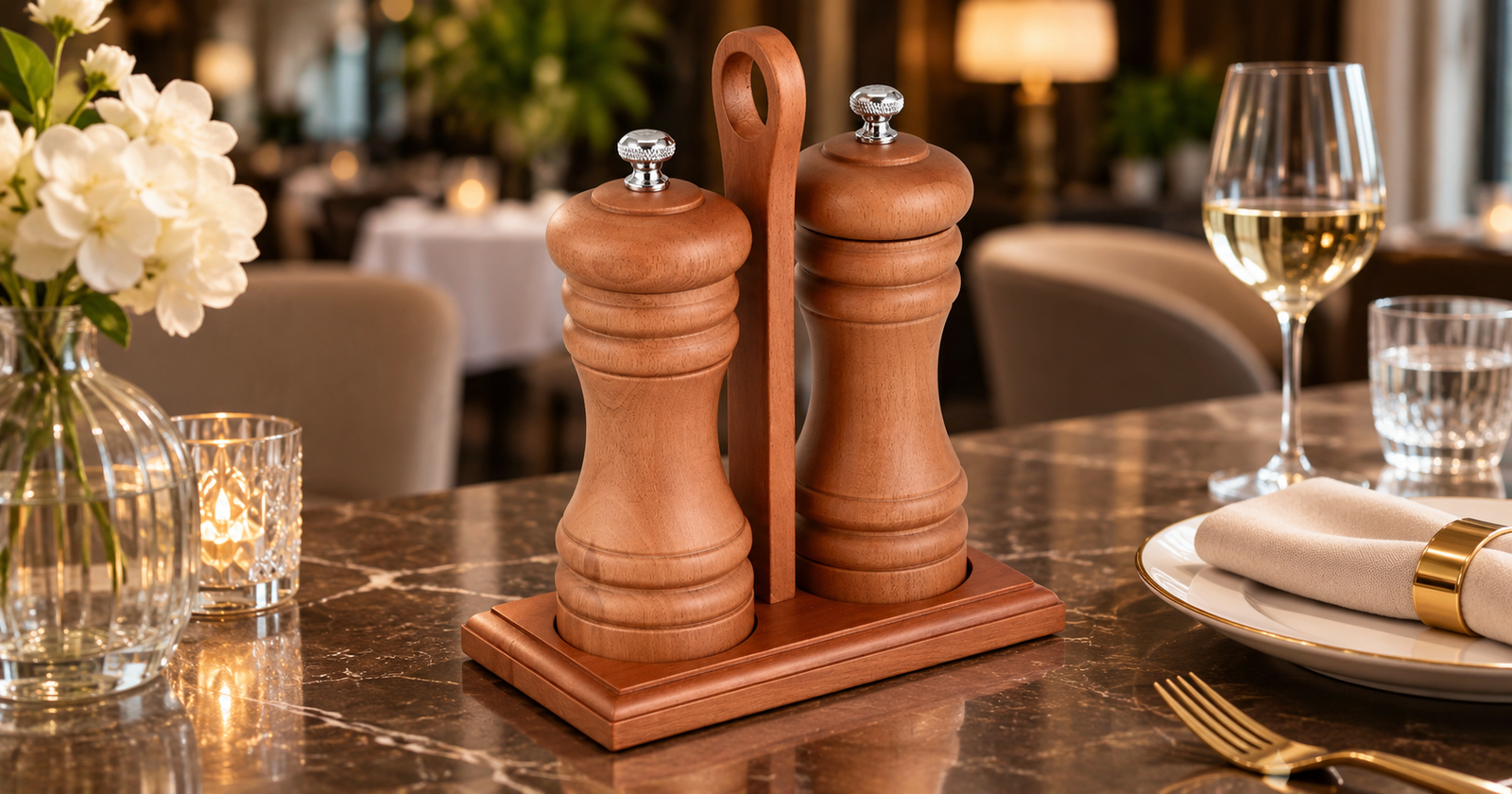
A commercial manual pepper mill is more than a kitchen tool. It is often placed directly on restaurant dining tables, where guests can add freshly ground pepper before eating.
This makes its wooden body, appearance, and surface finish important commercial considerations.
Appearance and Table Presentation
A well-finished wooden mill can complement restaurant tableware and contribute to the dining atmosphere.
A suitable design should remain visually appealing through regular handling, rather than looking attractive only when new.
Protective PU Surface Finishing
For our currently recommended wooden mills, the exterior uses a protective PU coating, while the internal wooden spice chamber remains uncoated.
The exterior finish is intended to resist incidental moisture, stains, and everyday handling.
For restaurants, this matters because premature coating damage, surface deterioration, or moisture-related problems can lead to earlier replacement and additional purchasing costs.
Protective finishing does not make wood completely waterproof. Appropriate cleaning and avoiding prolonged water exposure remain essential.
Buyers can learn more in our wooden pepper mill finishing guide.
Dedicated Pepper and Salt Mill Trays for Cleaner Tables
In restaurants, pepper and salt mills are often placed together for convenient guest use.
PepperMillSourcing also offers a dedicated tray designed to hold both mills as a matching tabletop set.
The tray helps:
- Keep pepper and salt mills organized and easy to access.
- Collect residual seasoning around the grinding outlets.
- Reduce direct contact between the outlets and the tabletop.
- Limit exposure to moisture present on table surfaces.
- Make the seasoning set easier to move during table cleaning.
These practical details can improve everyday table organization and help reduce unnecessary exposure to moisture and seasoning residue.
For frequently used restaurant tableware, simple accessories can support cleaner presentation and more convenient maintenance.
Multiple Pepper Mill Sizes for Commercial Applications
Commercial pepper mills come in different sizes to suit different service environments.
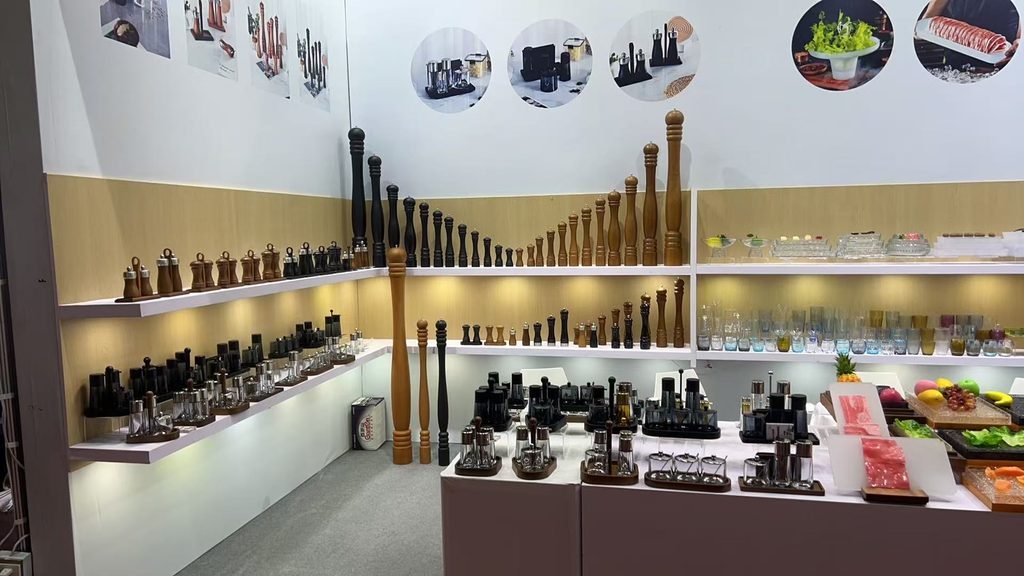
PepperMillSourcing offers conventional 6, 8, 10, and 12-inch models, as well as oversized 20-inch and extra-tall 45-inch options.
| Size | Typical Commercial Use |
|---|---|
| 6–8 inches | Restaurant tables and everyday seasoning |
| 10–12 inches | Kitchen stations and tableside service |
| 20 inches | Distinctive tableside presentation |
| 45 inches | Extra-tall presentation and specialty hospitality service |
The 45-inch option is an unusually tall specialty design, intended for distinctive presentation rather than routine compact tabletop use.
Size alone does not determine grinding capacity. Buyers should assess the internal mechanism, handling requirements, and intended application.
Explore our commercial wooden pepper mills for additional product options.
Easy Maintenance and Long-Term Commercial Value
A commercial manual pepper mill is handled frequently in restaurant environments, so convenient cleaning and maintenance are essential for long-term use.
Our removable grinding mechanisms allow access to the grinding components for cleaning and inspection.
This makes it easier to remove accumulated seasoning residue and maintain the equipment during regular use.
Buyers should evaluate the complete product—not only the grinding core, but also the wooden body, protective coating, assembly, and cleaning requirements.
A durable, maintainable mill may offer better long-term value than a lower-priced alternative that requires frequent replacement.
How Should Wholesale Buyers Evaluate Samples?
For restaurant suppliers, hospitality distributors, and wholesale buyers, testing a commercial manual pepper mill is an important step before placing a larger order.
We recommend evaluating:
- Grinding output: Measure usable pepper or salt produced at the required grind setting over a defined period.
- Operating effort: Compare fine and coarse settings during repeated grinding.
- Construction: Inspect the wooden body, metal components, and assembly quality.
- Surface finishing: Test the coating under representative handling and cleaning conditions.
- Maintenance: Check grinding mechanism removal, cleaning, and reassembly.
- Tabletop use: Evaluate suitable sizes and the optional pepper-and-salt tray.
Our currently recommended products have undergone relevant FDA- and LFGB-related testing. Buyers can request available documentation and confirm its applicability to their selected model and market.
Performance note: No universal grams-per-minute output or durability-cycle figure is claimed here. Actual results vary by model, seasoning, grind setting, and operating conditions. Buyers should use representative samples to establish comparable measurements.
Request Samples, Specifications, or a Wholesale Quote
PepperMillSourcing supports commercial buyers with sample arrangements, available product information, and sourcing coordination.
MOQ depends on the selected model and customization requirements. Lead times are confirmed according to product availability, quantity, and project details.
Whether you need standard restaurant pepper mills, extra-tall designs, matching salt grinders, or private-label options, we welcome inquiries.
Contact PepperMillSourcing to request samples, discuss available sizes, review relevant testing documents, or obtain a quotation.
Conclusion: Commercial Quality Goes Beyond Motor Power
A well-designed manual pepper mill can remain an effective option for frequent restaurant seasoning.
The value comes from combining suitable grinding components, effective power transmission, durable wooden construction, protective finishing, and convenient maintenance.
At PepperMillSourcing, we focus on these practical details while offering different sizes and accessories for restaurant, hospitality, and wholesale applications.
For commercial buyers, the best way to judge a pepper mill is to test how it grinds, handles, looks, and holds up under the intended working conditions.